

Life Beyond Abuse and Suicide
What Remains is a series of survivor-led resources for women whose lives have been shaped by the suicide of someone who harmed them. Here you will find reflections, resources, and voices that recognise the complexity of grief, trauma, and survival. What Remains also includes guidance for professionals and services supporting women and families navigating this experience.

Many women live through something that is rarely spoken about.
When someone who has used violence, coercion, or abuse dies by suicide, the story that follows can become deeply complicated. Public narratives often centre the tragedy of the death, while the history of abuse disappears from view.
For the women and children who remain, the aftermath can include grief, relief, confusion, anger, responsibility, and the long echoes of trauma. These feelings can exist at the same time. Nothing about this experience is simple.
Abuse and suicide bring together two experiences that society often struggles to hold with honesty and care. Survivors may find themselves navigating trauma while also living with a form of grief that does not fit easily into expected stories about loss. Those supporting families may also encounter this situation without clear language or guidance.
Trauma and grief can affect the brain and body in powerful ways. Many survivors find their nervous system remains on high alert, affecting sleep, memory, concentration, and the ability to feel calm or safe. These responses are not signs that something is wrong with you. They are common effects of trauma and loss, and many people experience them while navigating the aftermath of abuse and suicide.
What Remains exists to hold the reality of suicide and abuse with care, making space for the complexity of survival and grief — and remembering that what remains is not only pain, but also hope, courage, and possibilities
For Survivors
If this is the experience you are living with, you are not alone. Even though it often remains invisible to others, many women are quietly navigating the complicated aftermath of abuse and suicide.
If someone who harmed you has died by suicide, you may be carrying many different feelings. Women often describe a mixture of grief, relief, anger, confusion, guilt, numbness, or deep exhaustion after years of living with coercion, fear, or control. These emotions can exist side by side, even when they seem to contradict each other.
When someone dies, people often expect the story to become simple. They may speak about tragedy, forgiveness, or the loss of a life, while the reality of the abuse fades from view. But your experience does not disappear because someone died.
The harm you lived through matters. Your safety matters. Your healing matters.
This space was created so that women navigating this experience know they are not alone. You are welcome to explore what is here slowly, taking what feels helpful and leaving what does not.
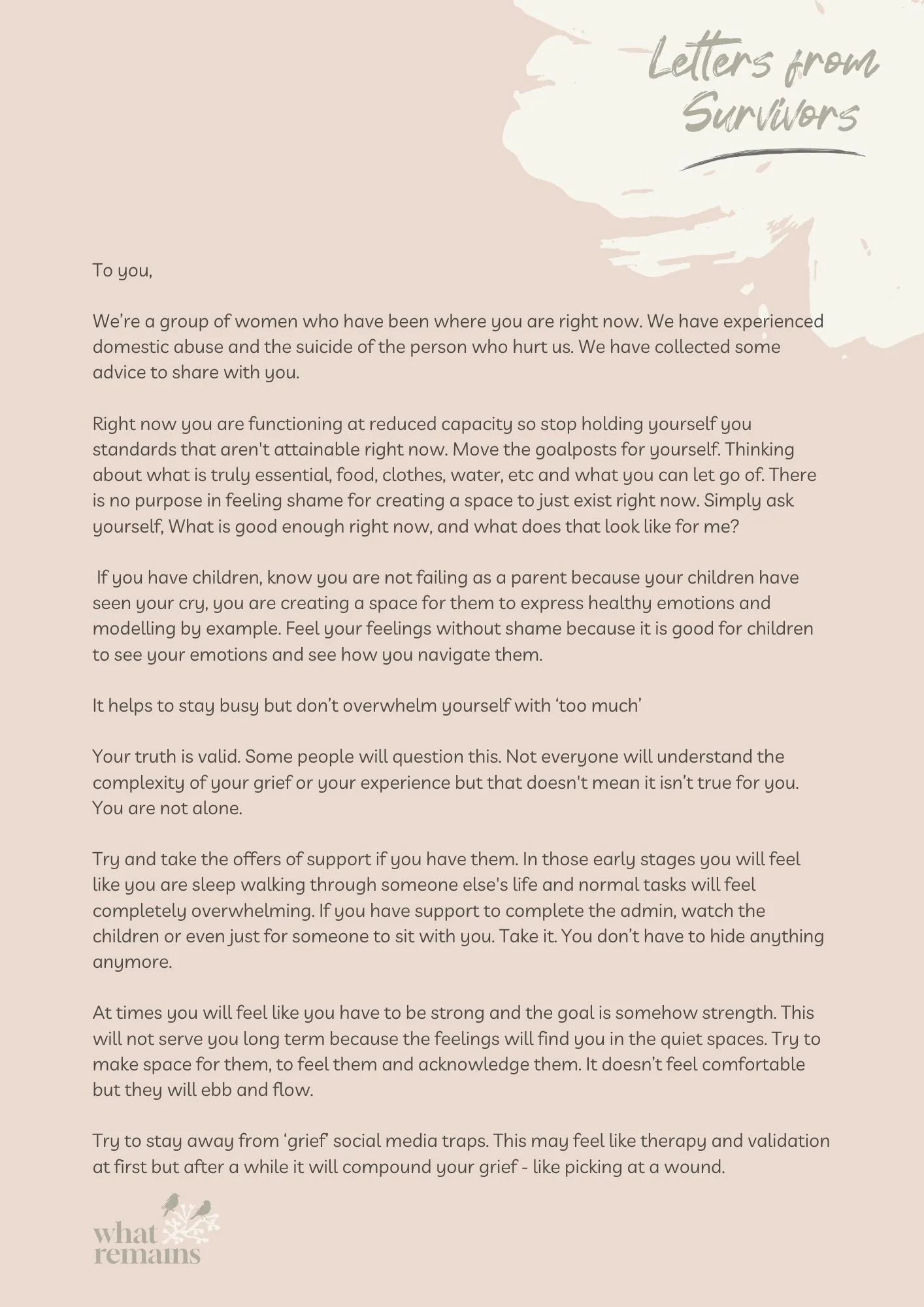
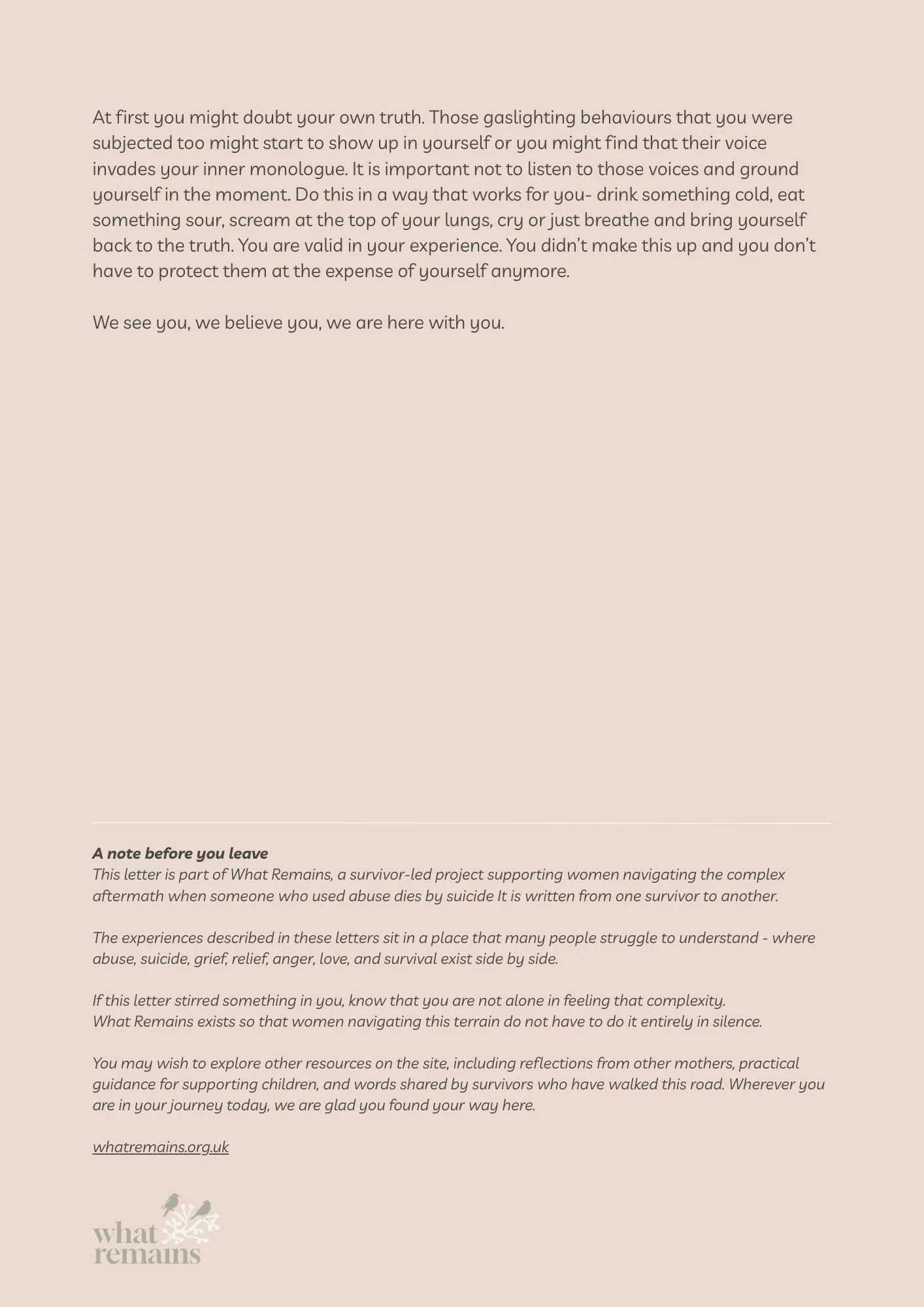
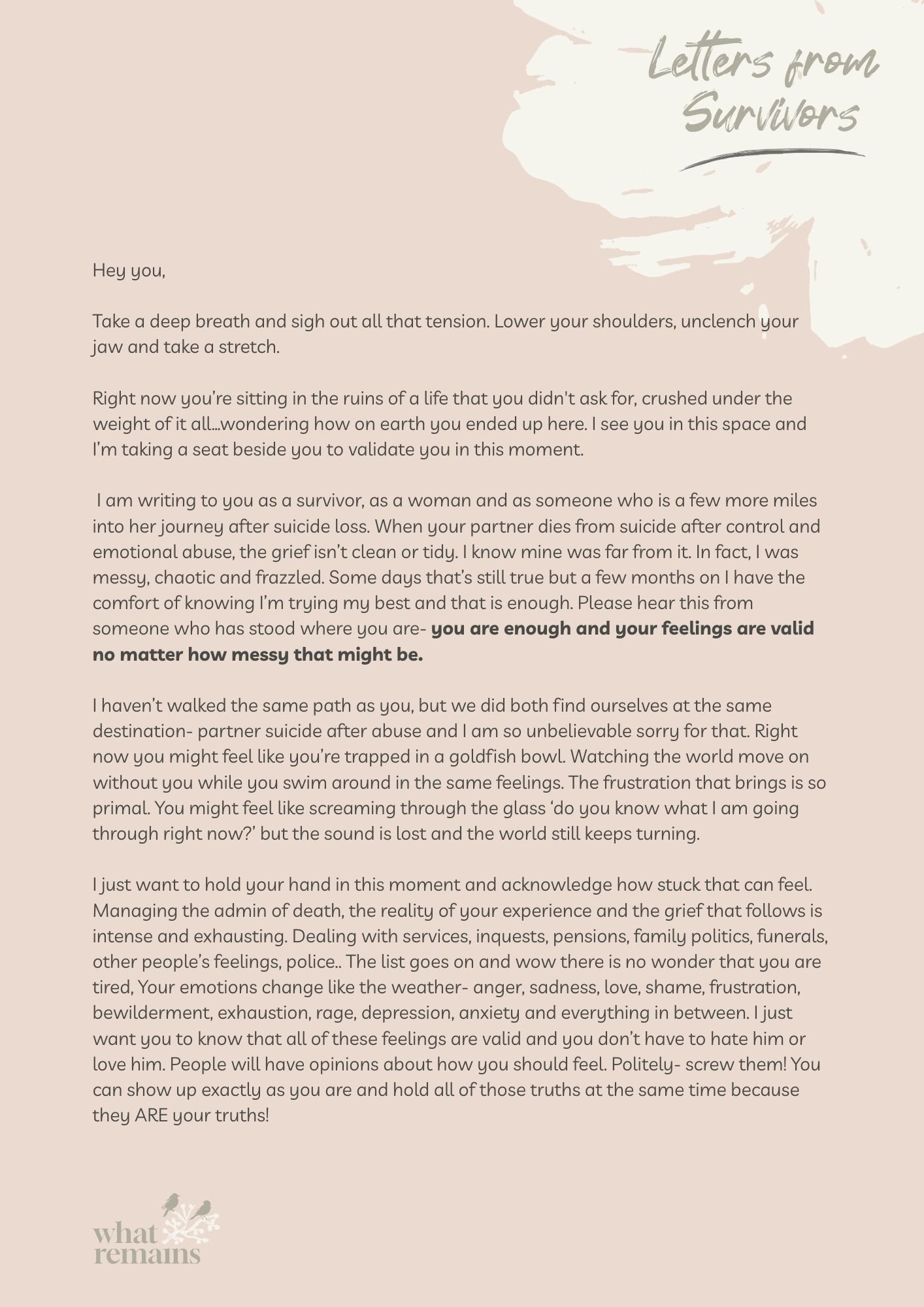
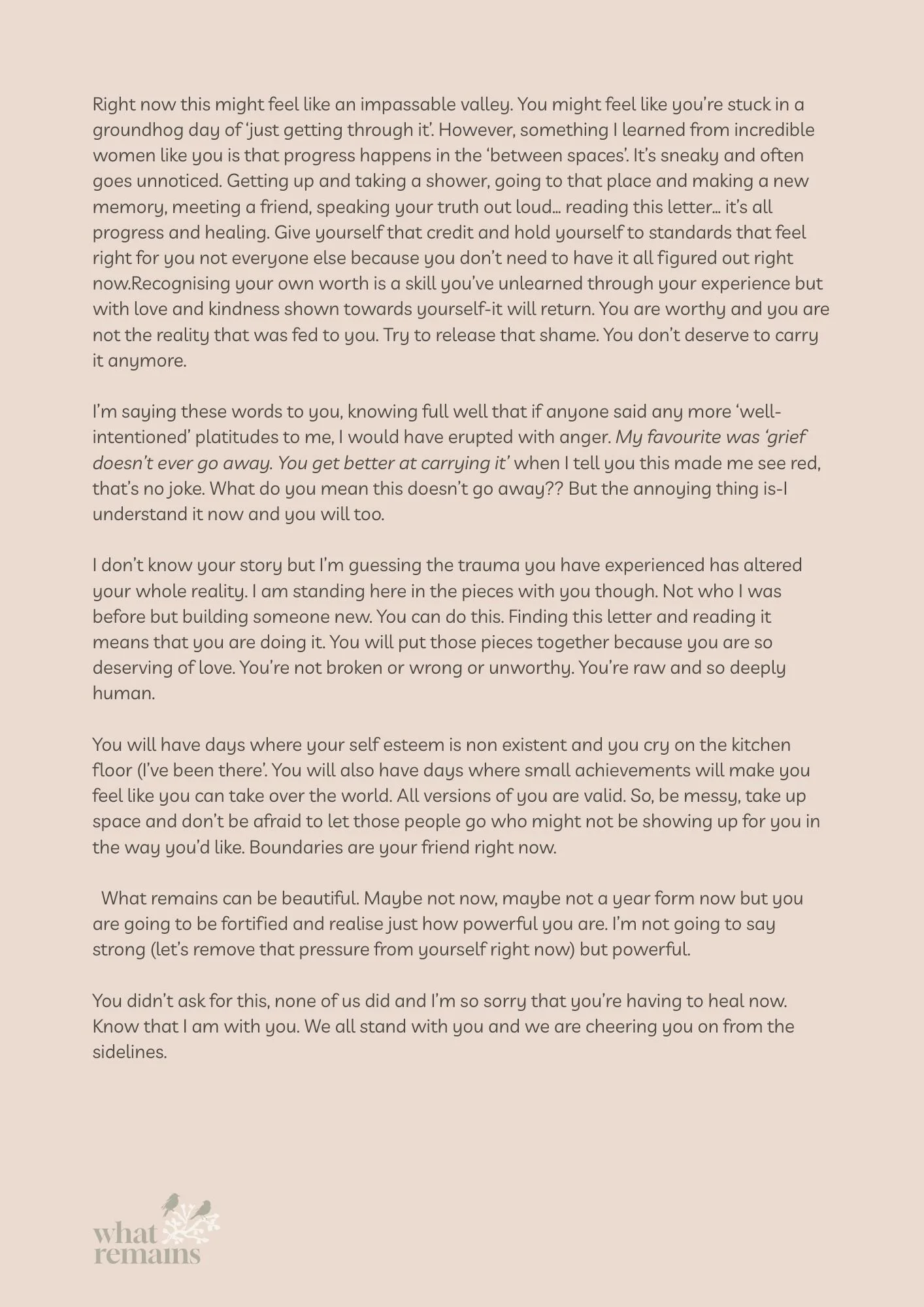
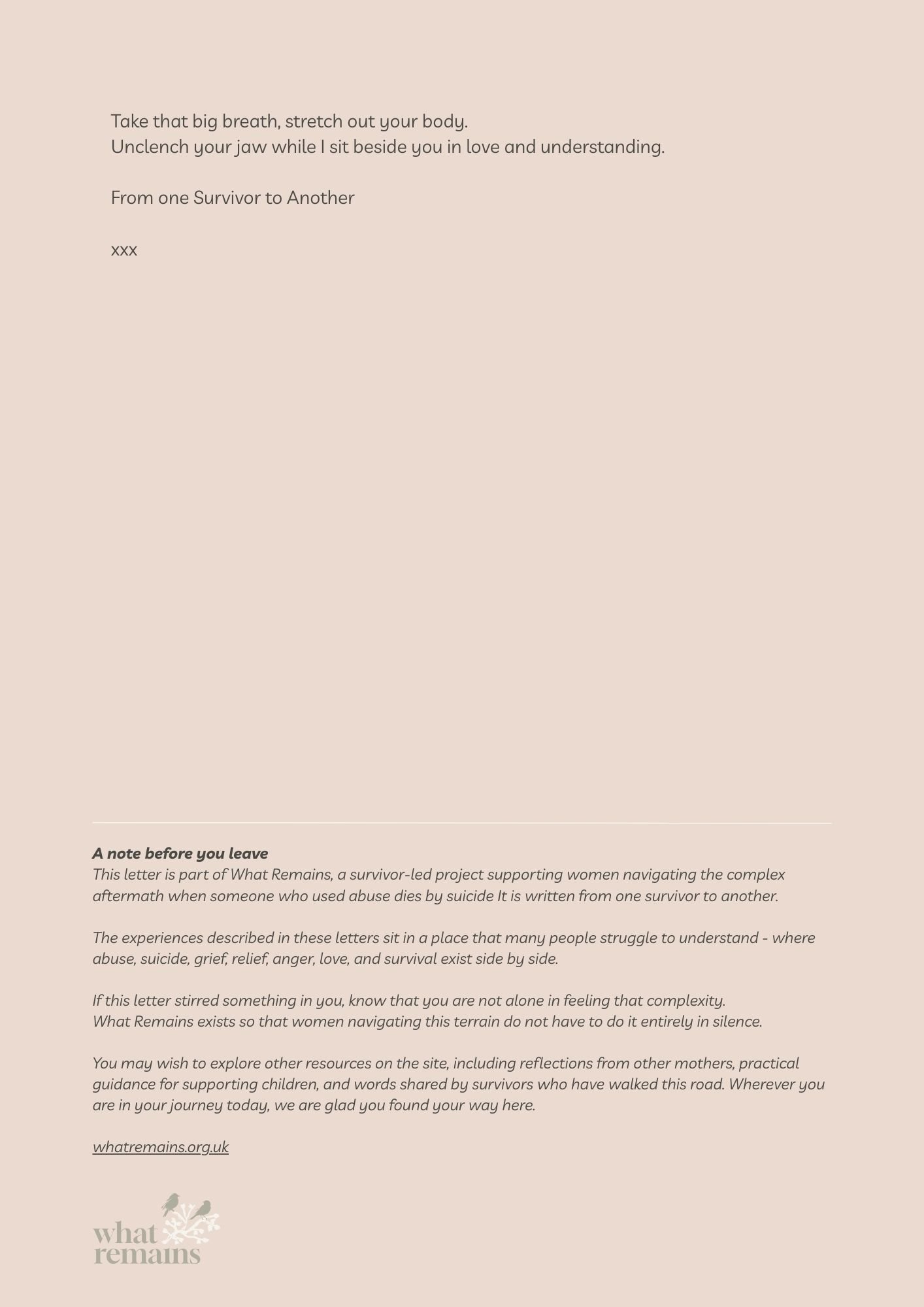
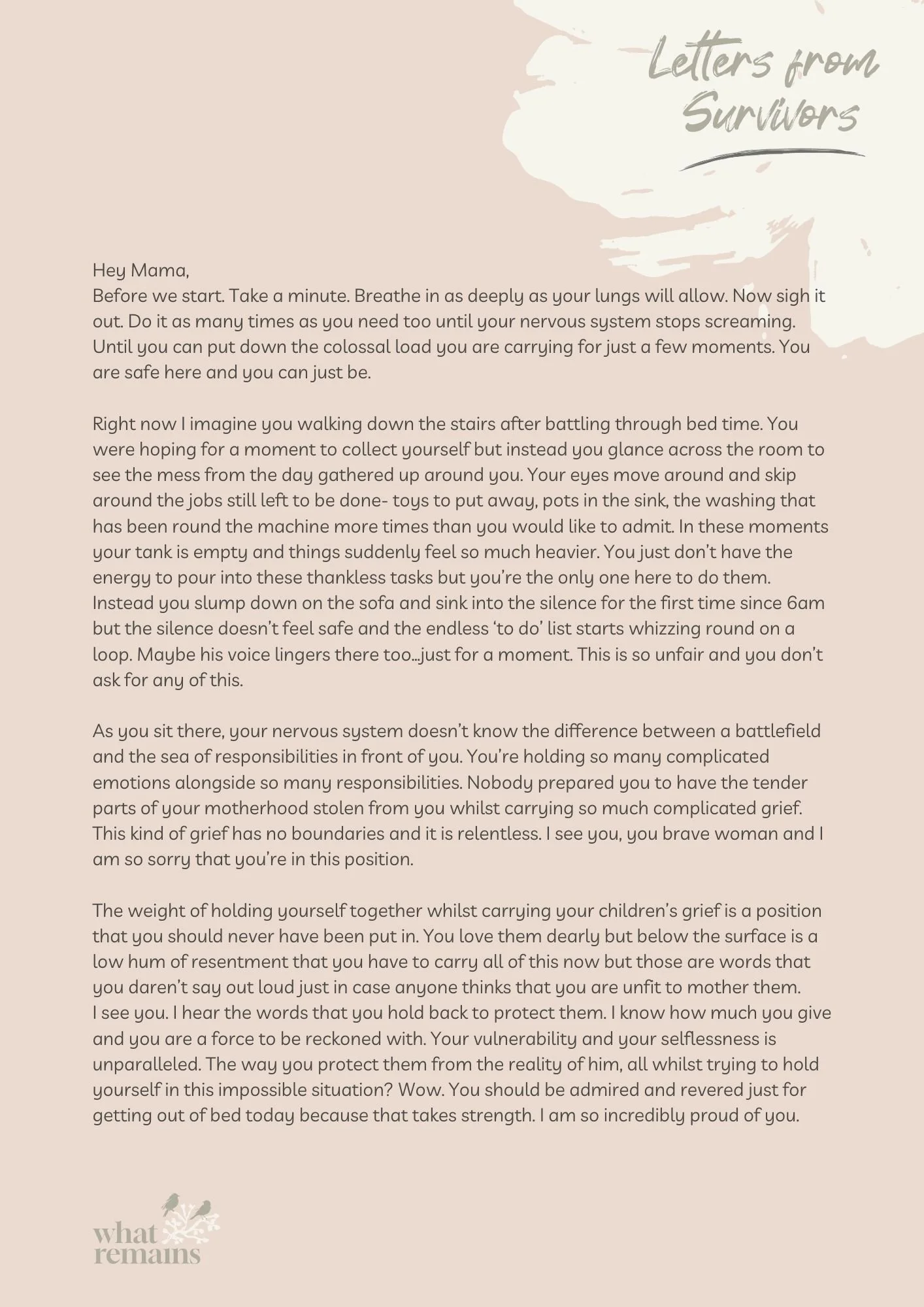
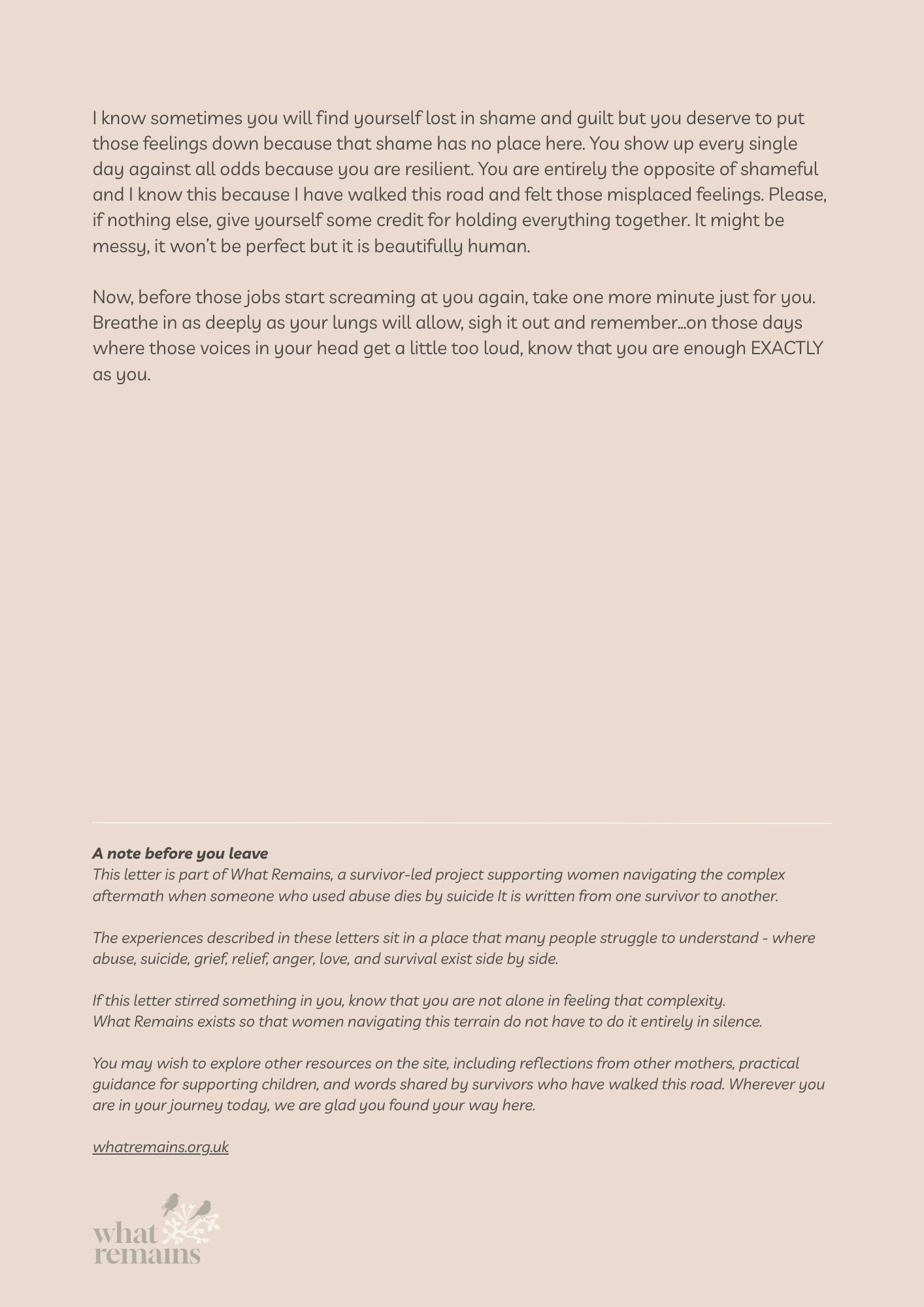
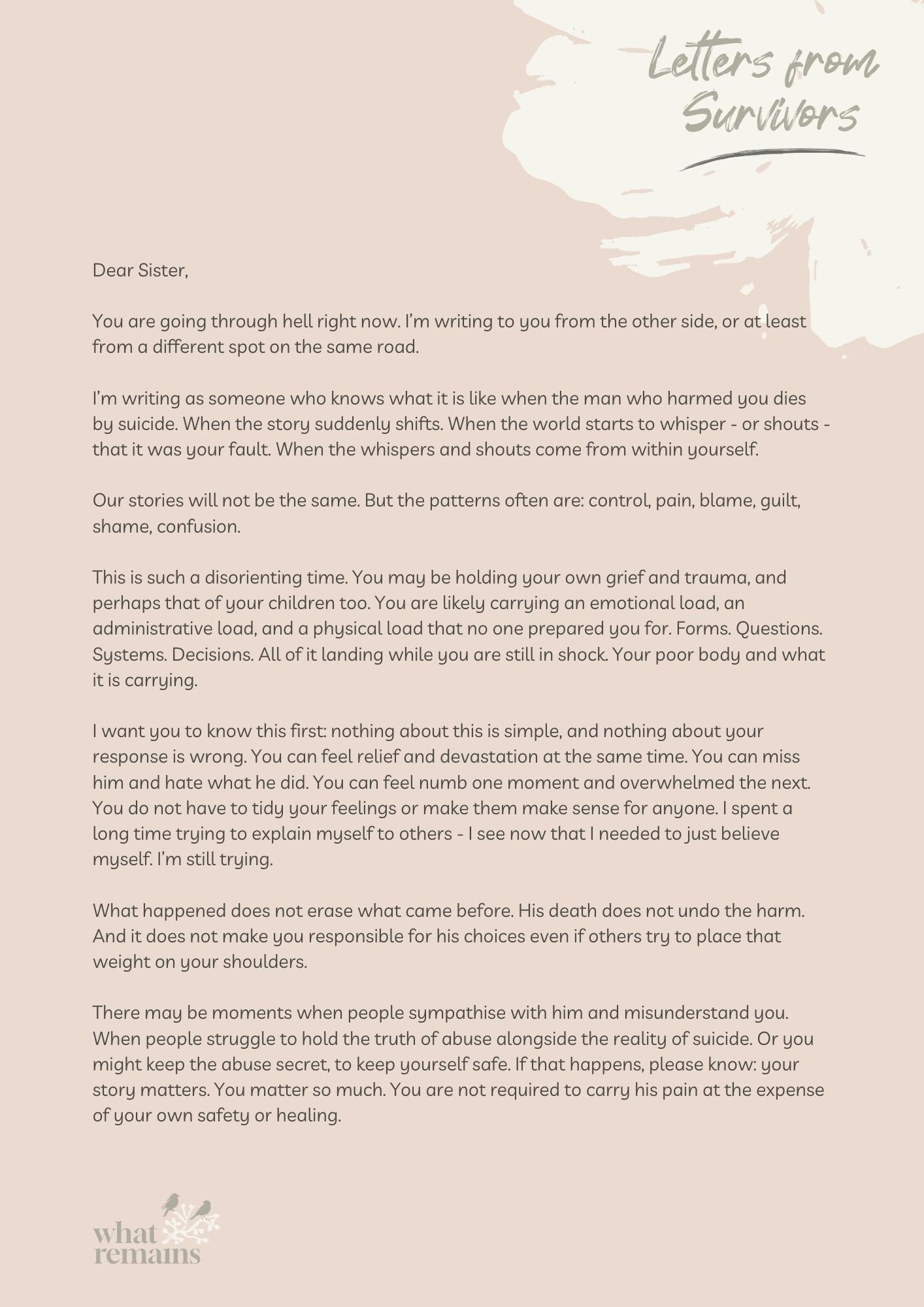
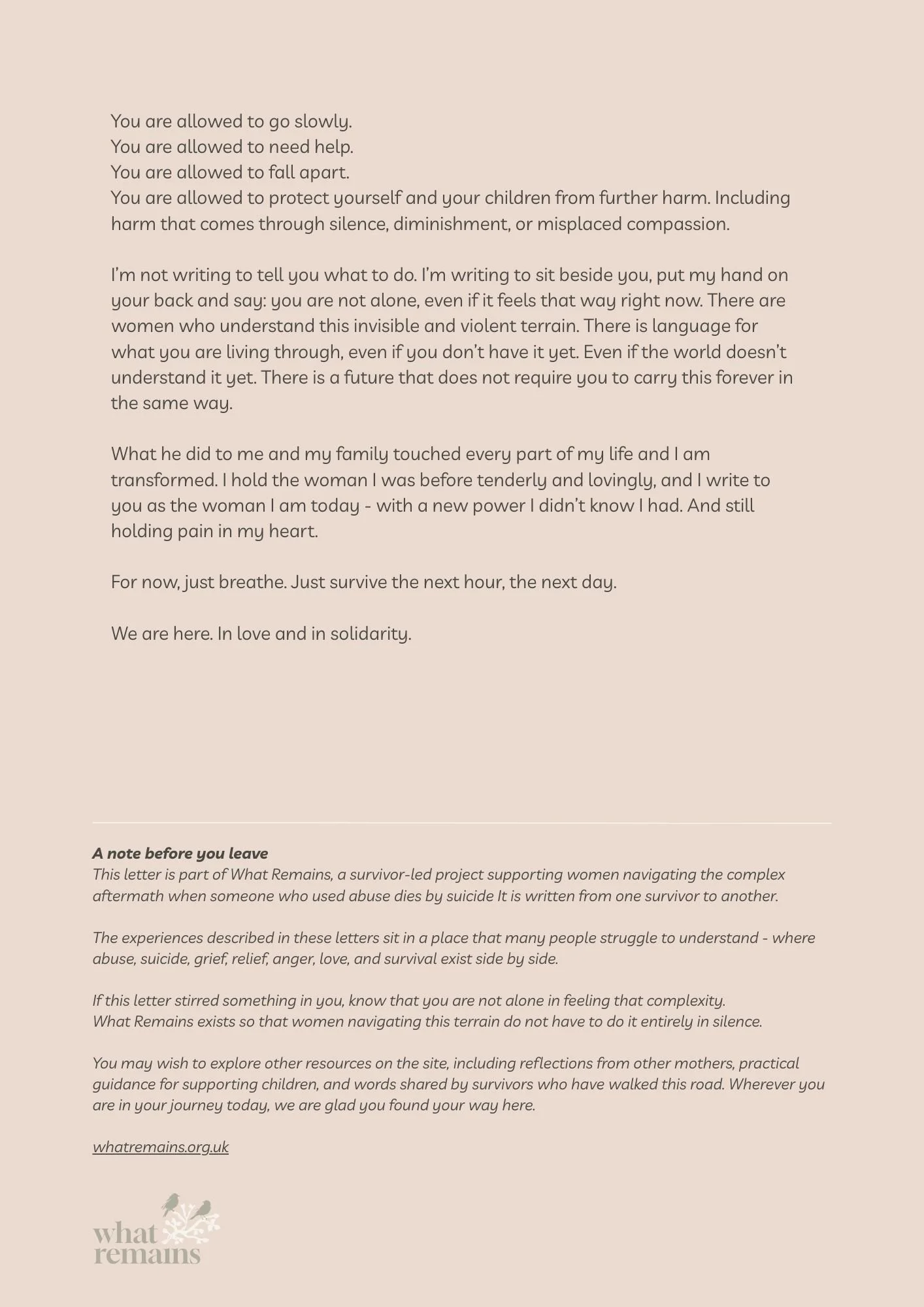
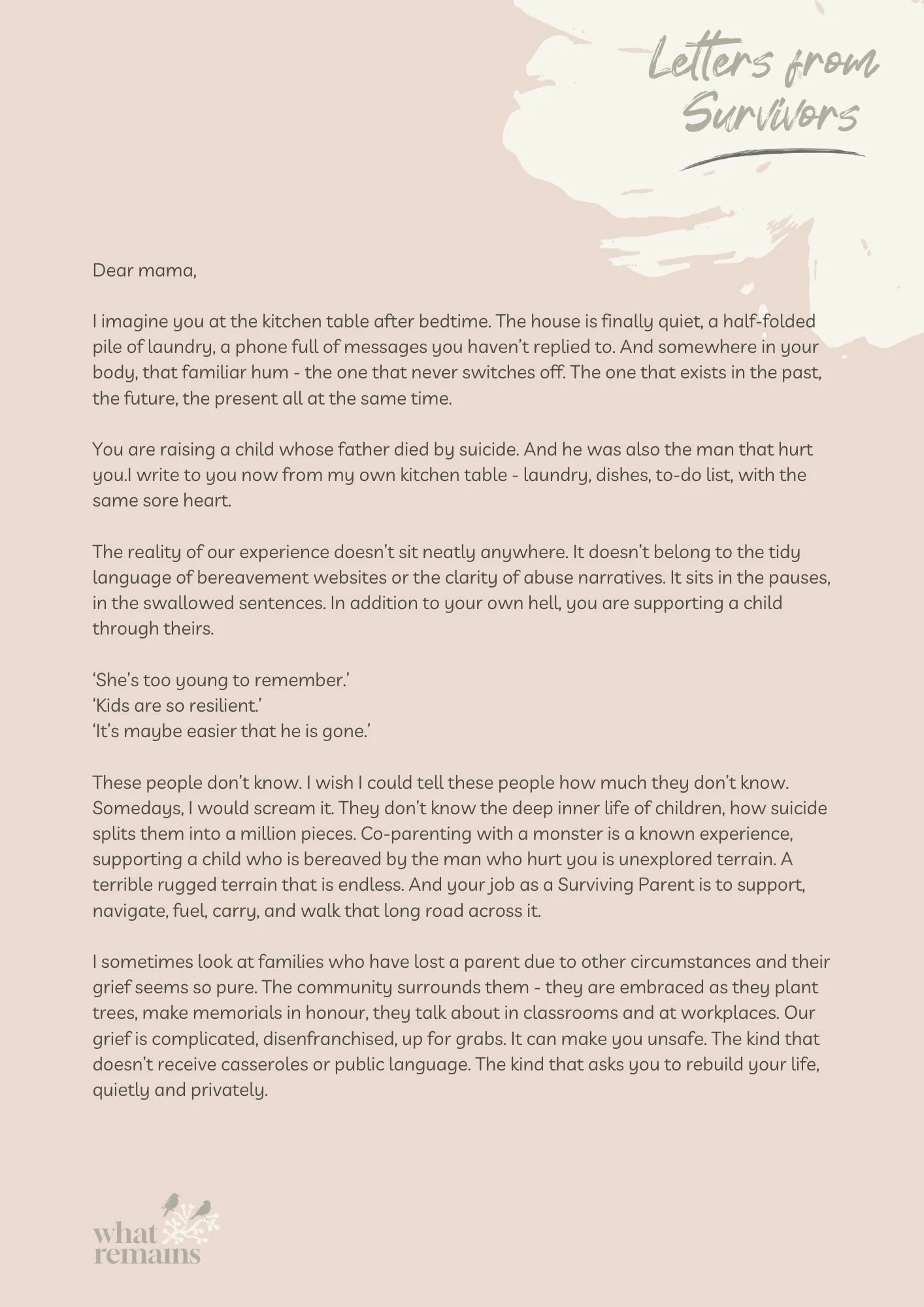
Some experiences are hard to explain to people who have not lived them. Here, survivors share letters written to women navigating the suicide of someone who harmed them. These words are not advice - simply voices reaching across distance, offering recognition, honesty, and the quiet reassurance that you are not alone.
Letters from Women

Words to Hold On To
A collection of affirmation cards written by women for women living with the aftermath of abuse and suicide. These short reflections offer reassurance, grounding, and reminders that your experience is real, your feelings are valid, and healing can happen slowly, in your own time.

Moments to Pause
This is a collection of guided audio reflections created by survivors and professionals. These recordings offer gentle space to slow down, breathe, and find moments of steadiness on difficult days.
This meditation is a grounding exercise to help you find your feet when you are overwhelmed.
This meditation is a grounding exercise to help you sit with more ease with your feelings.
Parenting After Complex Loss
Mothers raising children after the suicide of someone who harmed them often navigate grief, protection, and difficult questions at the same time. This downloadable resource shares reflections from professionals and women who have lived this experience, offering understanding and reassurance to other mothers walking a similar path.

For Those Supporting Someone
Supporting a woman after the suicide of someone who harmed her can be complex. You may not fully understand the history of the relationship, the abuse she experienced, or the mixture of grief, anger, relief, and sadness she may be feeling.
The most important place to begin is by believing her. Allow space for all of her feelings without judgement, even when they seem contradictory. Listening with care and accepting the complexity of her experience can help restore her sense of safety, dignity, and trust.
For Professionals & Services
What Remains for Professionals and services is a reflective guidebook for those supporting or coming into contact with women with experience of perpetrator suicide.

About What Remains
Thanks to funding from Kent and Medway Community Mental Health Fund, What Remains was created by survivors rebuilding their lives after the suicide of the men who harmed them. Alongside caring and compassionate professionals, this space was created so that women and families do not have to navigate the experience alone.
What Remains brings together survivor voices, reflections, and resources that acknowledge the realities of trauma, grief, and survival. But more than anything, What Remains is about creating a space for healing, rebuilding, and a hope in the future.
All materials are offered freely. Nothing is paywalled or gated.



Stay informed
Occasional updates when new resources are added. No obligation. You can unsubscribe anytime.
Your privacy will be respected and your details never shared.

Care and Safety
Some of the content on this site may feel difficult to read. If anything feels overwhelming or activating, you are welcome to pause or step away. You can return another time, or not at all.
If you are currently experiencing domestic abuse, please prioritise your safety. The resources here are not designed for crisis support.
We are not a support service and will not be able to answer any emails looking for support.
If you need immediate help, please seek support from local services or a trusted person.